
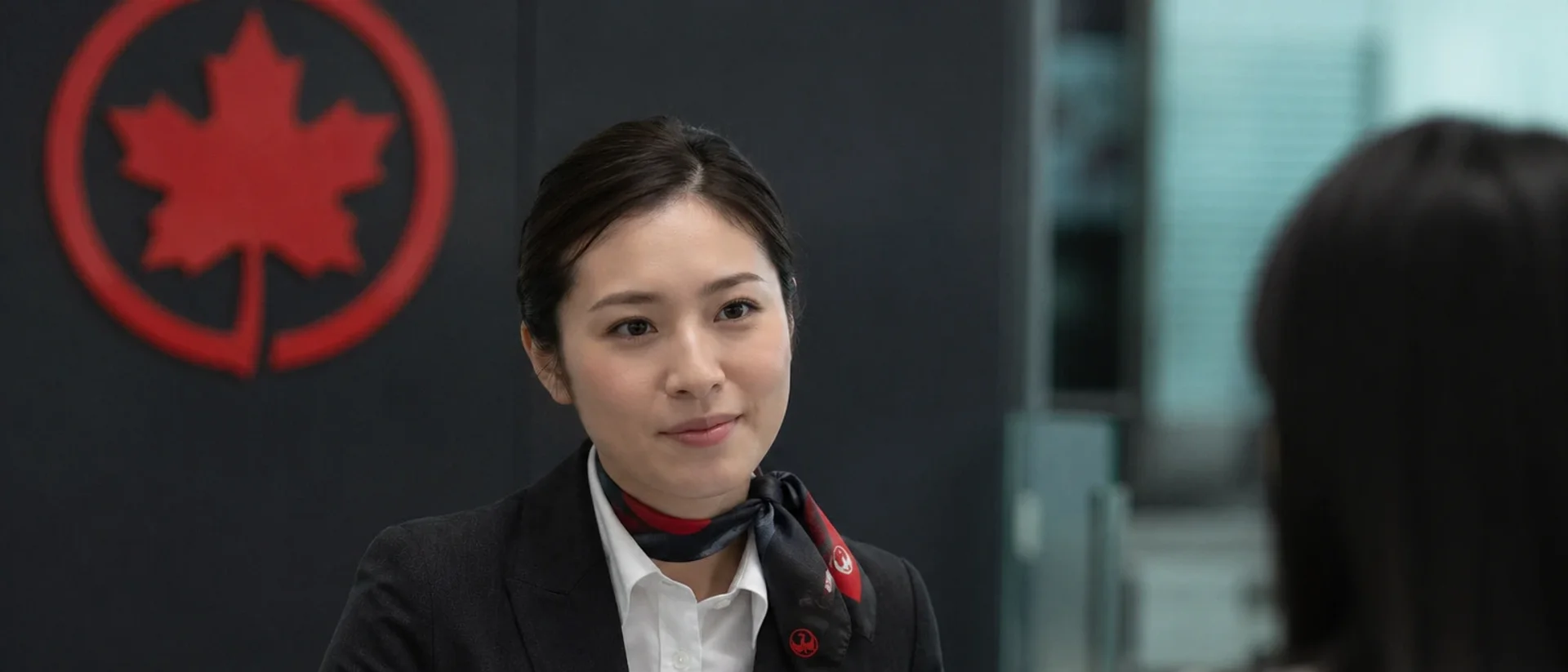
Air Canada's lawyers told a tribunal that the airline's chatbot was a separate legal entity responsible for its own actions, after the bot invented a refund policy that does not exist. Tribunal member Christopher Rivers called the argument a remarkable submission and ordered Air Canada to pay Jake Moffatt $812.02.
Air Canada told a court its chatbot was "a separate legal entity." The court disagreed.
On November 11, 2022, Jake Moffatt's grandmother died in Ontario. He went to Air Canada's website that same day to book a last-minute flight from Vancouver to Toronto for the funeral, and ended up talking to the airline's support chatbot.
What the Chatbot Invented
The bot told Moffatt that Air Canada offered reduced bereavement fares, and that if he needed to travel right away he could buy a regular ticket and apply for a refund afterward by submitting a Ticket Refund Application form within 90 days. He took the screenshot. He bought the Vancouver to Toronto leg for $794.98, then a return flight for $845.38 a few days later. Total: $1,630.36.
The actual Air Canada bereavement policy, sitting on a separate page that the chatbot helpfully linked to, said the opposite: bereavement consideration does not apply to requests made after travel has been completed.
The Email That Should Have Ended It
Moffatt applied for the refund within the 90-day window the bot had promised. After months of back and forth, on February 8, 2023, an Air Canada representative wrote back and admitted the chatbot had provided "misleading words." The fix the airline proposed: it had noted the issue so it could update the chatbot. Moffatt was offered a $200 goodwill coupon. He declined.
Air Canada's Defence
At the BC Civil Resolution Tribunal, Air Canada argued it could not be held liable for information provided by its agents, servants, or representatives, including a chatbot. In effect, as tribunal member Christopher C. Rivers put it in the decision, "Air Canada suggests the chatbot is a separate legal entity that is responsible for its own actions."
Rivers called this a remarkable submission. Then he kept going.
"While a chatbot has an interactive component, it is still just a part of Air Canada's website. It should be obvious to Air Canada that it is responsible for all the information on its website. It makes no difference whether the information comes from a static page or a chatbot."
On Air Canada's claim that Moffatt should have cross-checked the chatbot against the company's actual bereavement page, Rivers added that the airline "does not explain why customers should have to double-check information found in one part of its website on another part of its website."
The Order
On February 14, 2024, Rivers ordered Air Canada to pay Moffatt $812.02 within 14 days, broken down as $650.88 in damages, $36.14 in pre-judgment interest under the Court Order Interest Act, and $125 in tribunal fees. Air Canada also tried to argue contractual terms from its Domestic Tariff barred the claim, but did not actually file the tariff. Rivers noted it is "not enough in a legal process to assert that a contract says something without actually providing the contract" and dismissed the defence.
Why It Matters
Moffatt v. Air Canada (2024 BCCRT 149) is now the case lawyers cite when companies float the idea that their AI products are not really their problem. The tribunal's answer fits in a sentence: a chatbot is part of your website, and you own your website.
Frequently Asked Questions
What was Moffatt v. Air Canada about?
Did Air Canada really argue its chatbot was a separate legal entity?
How much did Air Canada have to pay?
When was the decision issued?
What did Air Canada do after the ruling?
Verified Fact
Primary source: full text of the BC Civil Resolution Tribunal decision Moffatt v. Air Canada, 2024 BCCRT 149, dated February 14, 2024 (File SC-2023-005609), Tribunal Member Christopher C. Rivers. All direct quotes (paragraphs 22, 27, 28, 31), the dollar breakdown (paragraph 44: $650.88 + $36.14 + $125 = $812.02), the flight prices (paragraph 18: $794.98 and $845.38), the Feb 8 2023 "misleading words" admission (paragraph 22), and the $200 coupon detail (paragraph 41) come directly from the decision. Cross-checked against ABA Business Law Today coverage (Feb 2024), Dentons Data writeup, McCarthy Tetrault TechLex blog, CBC News, and CBS News reporting. Nothing was added that is not in the decision.
BC Civil Resolution TribunalRelated Topics
More from Lawsuits
The Hotel Had No Policy Against This
The Nashville Marriott at Vanderbilt confirmed Erin Andrews' room number to a caller and booked him into the adjacent room. Michael Barrett then used a hacksaw to modify her pe…
Wabash National Knew the Fix Cost $313. They Said No.
Trailer manufacturer Wabash National knew a safer rear guard design existed for 30 years - it cost $313 per trailer to install. The company chose not to. In May 2019, Taron Tai…
She Reported Racism and Won $11.3 Million
Röbynn Europe said Equinox ignored racist and sexist comments, then fired her after she complained. A jury sided with her and hit the luxury gym with $11.25 million in dama…
Walmart Ditched a $500M Glove Deal
Walmart agreed to buy more than $500 million in medical gloves, then backed out - and an Arkansas jury hit it with a $101 million verdict.